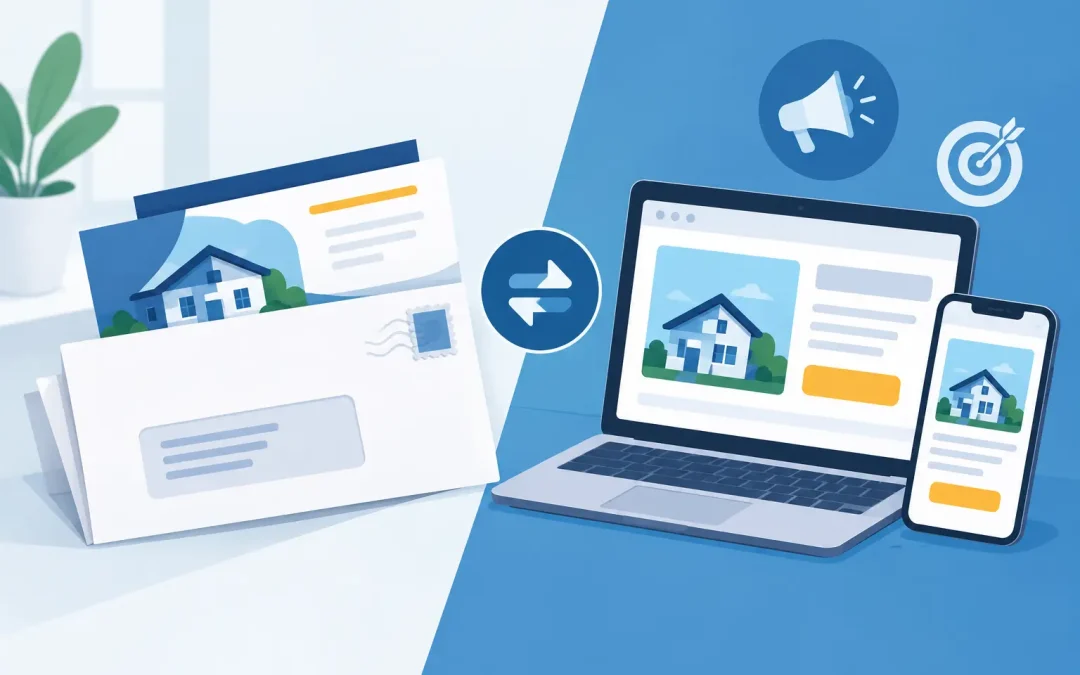
A special finance prospect does not become valuable because they saw your logo three times. They become valuable when you reach them at the right point after a filing or discharge, with an offer they can act on. That is the real issue in bankruptcy mailers vs digital ads. One channel gives you a direct line to a known household. The other gives you reach, speed, and repetition – if the platform lets you find the right audience at all.
For dealerships, mortgage professionals, and lenders, this is not a branding debate. It is a cost-per-funded-deal debate. The winning channel is the one that produces contactable, qualified prospects in your geography without burning budget on consumers who are not in-market.
Bankruptcy Mailers vs Digital Ads: The Real Difference
Direct mail starts with a record. A bankruptcy filing, discharge, or seasoned bankruptcy event gives a marketer a specific trigger, a consumer identity, and a physical address. With fresh, local court-based data, your campaign begins with a defined audience rather than an algorithm’s estimate of who might be interested.
Digital advertising starts with platform inventory. You select a geography, audience parameters, creative, and budget. The platform decides who sees the message based on its own signals and optimization rules. That can generate volume, but it also puts a layer between your offer and the person you need to reach.
That distinction matters most in special finance. A dealer does not need more anonymous website traffic. A mortgage broker does not need thousands of cheap impressions from people outside the lending box. They need consumers whose circumstances have changed and who may be ready to consider transportation, refinancing, or a new path to homeownership.
Mail puts the offer in the consumer’s hands. Digital ads ask the consumer to be present on a platform, fit available targeting rules, notice the creative, and click. Each extra step can reduce response. Digital can still work, but it is not a replacement for a tightly targeted direct-mail strategy built around a fresh bankruptcy event.
Why Bankruptcy Mailers Still Produce Serious Leads
A well-executed bankruptcy mailer is built for direct response. The prospect receives a tangible offer with a clear next action: call, scan, visit, apply, or bring the mailer to the dealership. There is no competing newsfeed, no skipped pre-roll, and no mystery about who received the piece.
Control is the biggest advantage. You control the list, mail date, geographic radius, message, offer, frequency, and follow-up process. If a campaign underperforms, you can inspect the variables. Was the record too old? Was the offer weak? Did the sales team fail to answer calls? Did the mail piece create confusion? That is a fixable operational problem.
The quality of the data determines whether this control turns into revenue. A giant national file may look cheap on a per-name basis, then drain your budget with old addresses, irrelevant records, and consumers outside your practical selling area. Weekly delivery of current local records is different. It gives your team a manageable volume of prospects tied to a timely event.
Timing is not a slogan. A consumer who has recently completed a bankruptcy process may be reassessing transportation, housing, credit rebuilding, and monthly payment options. Your offer needs to arrive while that decision window is open. That is why stale lists fail. The name may be real, but the moment is gone.
Where Digital Ads Earn Their Place
Digital ads are useful when they support the campaign instead of pretending to be the entire lead engine. They are fast to launch, easy to test, and strong for maintaining visibility in a defined market. A dealership can test payment-focused creative, inventory messages, or trade-in offers in days rather than waiting for a print cycle.
Digital also handles follow-up well. When a consumer visits your website, engages with a form, or enters your CRM through a compliant source, your team can use email, text where permitted, and paid retargeting to keep the conversation moving. That is valuable after initial contact has been established.
But platform targeting has limits. Major ad platforms place restrictions on audience use and advertising categories, especially around financial products and sensitive personal circumstances. A marketer cannot assume they can upload bankruptcy-related information, build an audience around financial distress, or target consumers as precisely as a court-record-based mail campaign. Platform policies change, and the rules vary by channel.
Even when targeting is available, you are renting access. Costs can rise overnight. Delivery can shift. A campaign that worked last month may lose efficiency when the platform changes its optimization system or your competitors increase bids. That does not make digital ads bad. It means you should not hand over your entire acquisition strategy to a black box.
Cost Is More Than Postage or Cost Per Click
Marketers often compare postage against a cost per click and decide digital is cheaper. That is the wrong comparison. A click is not an appointment, an application, a sale, or a funded loan. Likewise, a mail piece is not automatically a lead just because it landed in a mailbox.
Compare channels by the full path to revenue. Include list cost, design, printing, postage, call handling, sales follow-up, applications, approvals, deals, and gross profit. If 2,000 targeted mailers produce 20 serious conversations and three funded deals, the campaign may beat a digital campaign that delivered 500 clicks but no qualified applications.
The same discipline applies to digital. If your ads generate form fills, track how many are reachable, credit-qualified, in your market, and actually scheduled. Low-cost leads become expensive fast when your sales team spends hours chasing incomplete or unqualified submissions.
Your best campaign may cost more at the top of the funnel and less per closed deal. That is the number that matters. Period.
The Strongest Play Is Often Both Channels
For many local operators, the best answer is not bankruptcy mailers or digital ads. It is direct mail as the primary trigger channel, with digital supporting awareness and response capture. Mail provides the targeted audience and the concrete offer. Digital reinforces your market presence when prospects search, visit your site, or compare options.
Keep the message consistent. If the mail piece promotes second-chance financing, the landing page, inbound call script, and showroom process should match. If the offer says low down payment or flexible approval options, your team must be prepared to explain terms accurately and responsibly. A sharp campaign can be ruined by a vague handoff.
Do not force exact attribution where it does not exist. A prospect may receive a mailer, search your dealership name, see a paid ad, and call two days later. Use campaign-specific phone numbers, offer codes, landing pages, CRM source fields, and disciplined sales notes. You are measuring a buying path, not trying to win an argument between channels.
How to Choose the Right Mix
Start with your sales capacity and territory. If your team can work a defined local market aggressively, fresh bankruptcy mailers give you a controllable prospecting engine. If you have strong creative, a clean website, and a fast internet department, digital can amplify that engine and capture extra demand.
Then look at the offer. High-ticket, credit-sensitive purchases usually benefit from direct contact and a clear explanation of the next step. A consumer considering a vehicle after bankruptcy may respond to a specific dealership offer more readily than a generic social ad. Mortgage campaigns may require a longer nurture path, making digital follow-up more useful after the initial outreach.
Finally, protect the campaign with process. Use current data. Suppress prior customers and bad records where appropriate. Train staff to respond quickly. Follow applicable federal, state, platform, privacy, credit, and solicitation requirements, and have qualified counsel review your practices. Strong targeting does not excuse sloppy compliance.
RED-INK was built for marketers who want a weekly source of local bankruptcy activity they can put to work, not another bloated list that sits in a spreadsheet. Fresh records give your offer a fighting chance. Your execution closes the deal.
The next move is simple: stop judging channels by vanity metrics. Put a focused offer in front of timely prospects, track every serious conversation through the sale, and keep investing where the revenue shows up.