
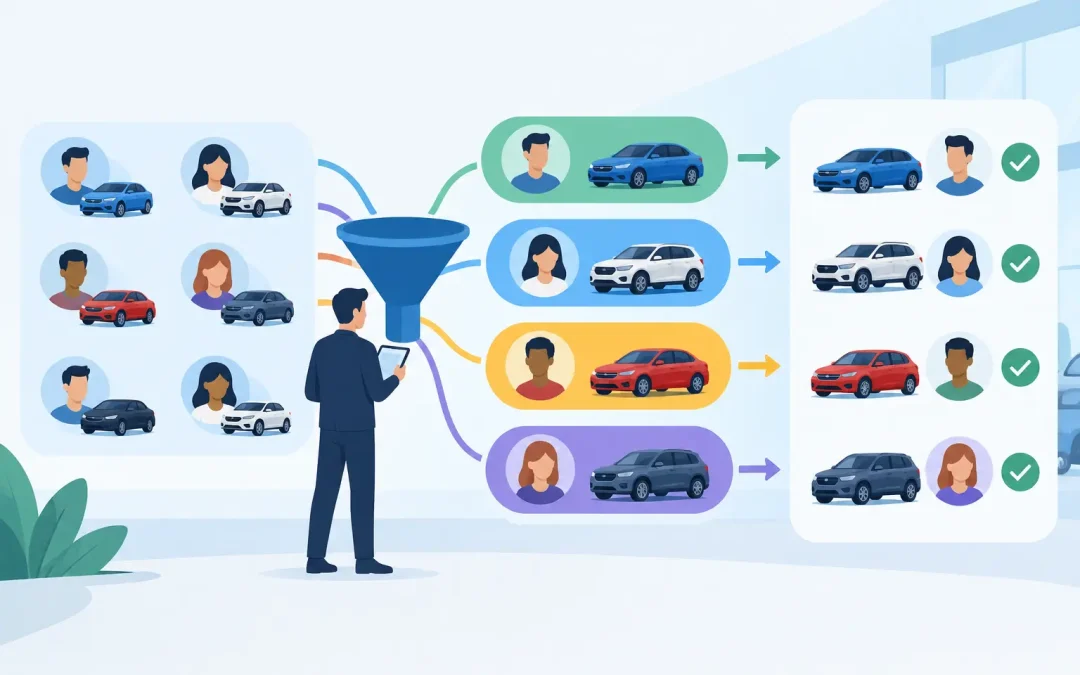
A 5,000-name auto list is not a lead strategy. It is a pile of names until you decide who gets contacted, when, with what offer, and by which channel. Knowing how to segment auto leads is what turns court activity and consumer data into appointments, applications, and funded deals.
For special finance dealerships, segmentation is not about making a spreadsheet look organized. It is about stopping wasted mail, protecting follow-up time, and putting the right payment-focused message in front of buyers when they are most likely to act. The goal is simple: deliver a relevant offer to a reachable prospect before another dealer does.
Start With Bankruptcy Timing
Bankruptcy timing should be one of the first filters in any special finance campaign. A consumer with a fresh filing, a recent discharge, and a seasoned bankruptcy record may all be financeable, but they are not in the same buying window and should not receive the same message.
Fresh filing activity can identify consumers entering a financial reset. Depending on the filing type, local lender programs, and your dealership’s underwriting appetite, these records may require a longer nurture sequence or should be held until a more appropriate stage. Do not force a one-size-fits-all offer on a consumer whose situation is still moving through the court process.
Recent discharges are often a stronger immediate auto opportunity. The debt event is resolved, the consumer may need reliable transportation, and the market is full of lenders willing to evaluate post-bankruptcy borrowers. This is where a clear special finance message earns attention: credit challenges are expected, trade-ins are considered, and a real approval path is available.
Seasoned bankruptcy leads deserve their own campaign as well. These prospects may have had time to rebuild, establish new payment history, or become eligible for a different vehicle and finance program. They may respond better to upgrade language, payment reduction messaging, or a broader vehicle selection instead of a basic “fresh start” pitch.
Timing is the trigger. Treat it that way. Weekly delivery gives your team a chance to work new records while the event is still relevant, rather than mailing an old database after the buyer has already purchased elsewhere.
Segment Auto Leads by Geography and Drive Time
A dealer cannot profit from a buyer who lives three hours away unless the gross profit and closing process justify it. Geography is not a cosmetic field. It controls mail cost, sales follow-up, delivery logistics, and show rate.
Build territories around realistic drive time, not just a broad state list. Most dealerships should begin with their primary market, then establish secondary ZIP code zones where they consistently draw buyers. If you have multiple rooftops, assign territories before the leads enter the CRM so the same prospect does not receive competing calls or offers from your own group.
Separate urban, suburban, and rural records when the market demands it. An urban buyer may prioritize transit reliability, compact inventory, and monthly payment. A rural buyer may need a truck, SUV, or dependable family vehicle. The finance qualification may be similar, but the inventory message should match the household’s likely use case.
Geography also helps control offer strength. Your closest ZIP codes can receive your best direct-mail package, a phone call, and immediate text follow-up when consent and applicable rules allow. Outer-ring markets may start with direct mail or a lower-cost nurture sequence. Spend the most on the prospects your team can realistically get into the showroom.
Build Segments Around Finance Readiness
Bankruptcy status alone does not tell you whether a lead is ready for a vehicle purchase. Your sales process needs practical readiness segments that guide both marketing and BDC follow-up.
A useful model separates leads by four factors:
- Event stage: active filing, recent discharge, or seasoned record.
- Location: core market, secondary market, or outside your workable radius.
- Contactability: complete address, phone availability where properly sourced and permitted, and deliverability history.
- Likely vehicle need: transportation recovery, family replacement, work vehicle, or upgrade opportunity.
The point is not to pretend you know everything about every household. The point is to give your team a reasoned priority order. A recent discharge in your core ZIP codes with a complete mailing address and a strong local inventory match should not sit in the same queue as an old, out-of-market record.
If your data includes household or demographic enhancement fields, use them carefully. They can help shape creative and inventory emphasis, but they should not replace the primary trigger: a documented financial event and a local buyer opportunity. Over-segmentation is a real problem. If every list gets divided into 40 tiny groups, your campaign becomes harder to execute and impossible to measure.
Match the Message to the Segment
The fastest way to waste a good lead is sending a generic “Bad Credit? Buy Here” postcard to everyone. That message may get attention, but it does not build confidence or explain why the buyer should act now.
Recent discharge segments need clarity and reassurance. Focus on a fresh start, real lender options, a simple application path, and dependable transportation. Avoid making promises your finance department cannot honor. “We work with recent bankruptcy buyers” is stronger than vague approval hype because it speaks directly to the situation without creating a compliance headache.
Seasoned records may need a different angle. Lead with payment options, trade value, newer inventory, or the ability to move out of an aging vehicle. A buyer two or three years past discharge is not necessarily shopping because of bankruptcy. They may be shopping because their vehicle failed, their family changed, or their credit position improved.
Geographic segments should influence creative too. Use the dealership name, a recognizable local reference, the closest location, and an easy-to-follow call to action. Direct mail performs better when the recipient understands this is a nearby dealer with a workable offer, not an anonymous national advertiser.
Create a Simple Lead Priority System
Your sales team does not need another complicated scoring model that nobody uses. It needs a short, visible priority system tied to action. Label leads as Priority A, B, or C based on event recency, market location, and data completeness.
Priority A leads are recent, local, and ready for immediate outreach. They receive the strongest mail piece and the fastest human follow-up. Priority B leads may be viable but need a less expensive touch pattern, such as standard mail plus scheduled re-contact. Priority C leads are outside the preferred radius, older, incomplete, or otherwise less urgent. Keep them in a separate nurture pool rather than burning high-cost marketing budget immediately.
Measure every segment separately. Track mail quantity, returned mail, calls, appointments, credit applications, approvals, deliveries, and gross profit. A segment with fewer leads can outperform a larger list if it produces more applications per 100 records and higher show rates. That is the number that matters, period.
Do not judge a list solely on call volume. A postcard that creates fewer calls but more finance-ready appointments may be the better campaign. Likewise, a low-cost older segment can still earn its place if it fills slower weeks without dragging down staff productivity.
Keep Your Data and Follow-Up Clean
Segmentation fails when records enter the CRM without ownership, timing, or a next step. Import every batch with consistent source names, delivery dates, event-stage labels, and geography tags. Your team should be able to answer three questions instantly: where did this lead come from, why is it being contacted now, and what campaign did it receive?
Suppress duplicates before each campaign. Suppress sold customers, active applicants, previous opt-outs, undeliverable addresses, and leads currently assigned to another salesperson. Nothing kills credibility faster than mailing a buyer who purchased from you last month or calling a consumer after they requested no further contact.
Use direct mail as the anchor when working bankruptcy-based prospect data. A physical offer gets into the home, can be timed to the record event, and gives your sales team a reason to follow up. Phone, email, and text can support the campaign only when your data source, permissions, and internal process support compliant use. Follow federal, state, and local rules, including do-not-call requirements and consumer privacy obligations. A high-response campaign is not worth creating unnecessary risk.
Test Without Slowing Down
Test one meaningful variable at a time. Compare a recent-discharge segment against a seasoned segment. Test a payment-focused message against a vehicle-reliability message. Test a tighter 15-mile territory against a 30-mile territory. Keep the offer, mail format, and follow-up process stable long enough to see what actually changed performance.
RED-INK customers use fresh, local court-based records because recency gives campaigns a fighting chance. But fresh data only pays when the dealer has a disciplined plan for routing, messaging, and follow-up. Buy leads that fit your market, work them on a schedule, and let results decide where the next dollar goes.
The best segment is not the most complicated one. It is the group your team can contact immediately with an offer that makes sense, then measure all the way to the deal jacket.